
Burden of Oesophageal Cancer in India
Oesophageal cancer is among the top ten cancers in India. India reports approximately 50,000–55,000 new cases annually. Mortality rates remain high due to late presentation, poor nutritional status, and lack of awareness of early symptoms. The disease is more common in men and typically affects individuals above 45 years of age.Oesophageal Cancer in Karnataka
Karnataka reports a significant number of oesophageal cancer cases, particularly in rural and semi-urban populations. Hospital-based cancer registries indicate a strong association with tobacco and alcohol use. Most patients present with locally advanced or metastatic disease, contributing to poorer outcomes.Key Statistics at a Glance
India: New oesophageal cancer cases per year: ~50,000–55,000 Oesophageal cancer deaths per year: ~46,000 Male predominance Karnataka: Significant contributor to gastrointestinal cancers Late-stage diagnosis commonWhat Is Oesophageal Cancer?
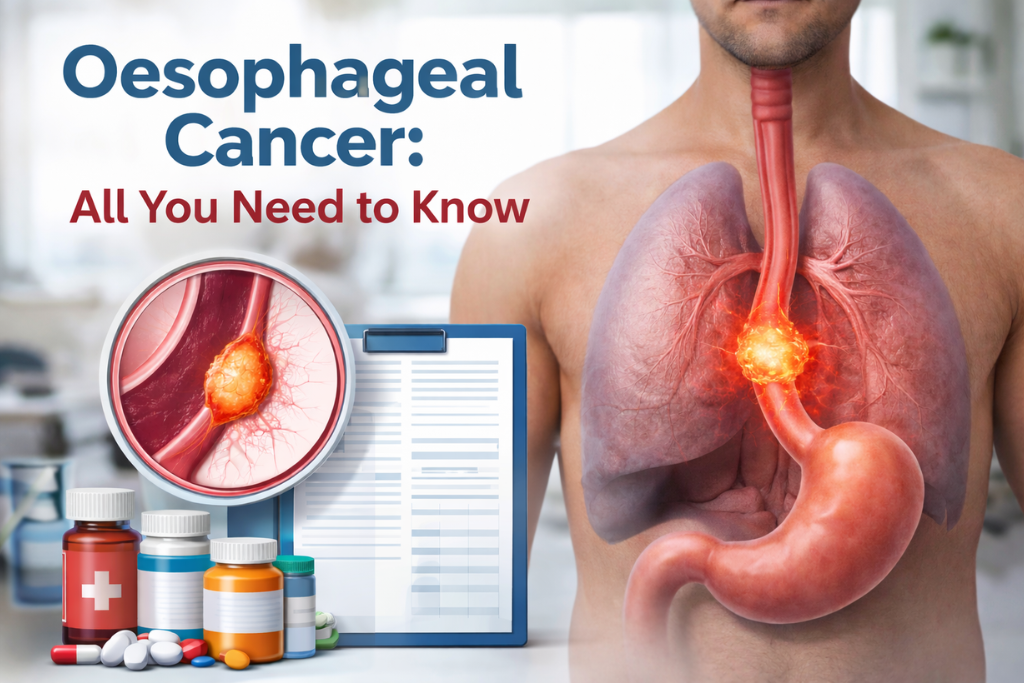
Oesophageal cancer occurs when abnormal cells grow uncontrollably in the lining of the oesophagus. These cells form a tumour that can obstruct swallowing and spread to nearby lymph nodes or distant organs such as the lungs and liver. The oesophagus is divided into the upper, middle, and lower thirds. The location of the tumour often determines the type of cancer, symptoms, and treatment strategy.Types of Oesophageal Cancer
1. Squamous Cell Carcinoma
This is the most common type in India. It arises from the squamous cells lining the oesophagus and commonly affects the upper and middle portions. It is strongly associated with tobacco use, alcohol consumption, and poor nutrition.2. Adenocarcinoma
This type arises from glandular cells and usually affects the lower oesophagus. It is associated with chronic acid reflux, Barrett’s oesophagus, and obesity.3. Small Cell Carcinoma
A rare and highly aggressive form of oesophageal cancer that spreads early.4. Other Rare Types
These include sarcoma, lymphoma, and melanoma of the oesophagus.Causes and Risk Factors of Oesophageal Cancer
Risk factors include tobacco use (smoking and chewing), excessive alcohol consumption, chronic acid reflux, Barrett’s oesophagus, obesity, poor diet low in fruits and vegetables, long-term consumption of very hot beverages, nutritional deficiencies, increasing age, and male gender. Avoiding tobacco and alcohol significantly reduces the risk of oesophageal cancer.Common Symptoms of Oesophageal Cancer
Avoiding tobacco and alcohol significantly reduces the risk of oesophageal cancer.Diagnosis of Oesophageal Cancer
Diagnosis involves upper gastrointestinal endoscopy with biopsy of suspicious lesions. Imaging studies such as CT scan of the chest and abdomen, PET-CT for staging, and endoscopic ultrasound in selected cases are used to assess disease extent. Blood tests and nutritional evaluation are also performed.Staging of Oesophageal Cancer
Staging depends on the depth of tumour invasion, lymph node involvement, and distant spread. Accurate staging helps guide treatment decisions and prognosis.Treatment Options for Oesophageal Cancer
Treatment depends on the stage, tumour type, location, and the patient’s overall health. Management is planned by a multidisciplinary cancer team.Nutrition and Supportive Care
Patients often face nutritional challenges due to difficulty swallowing. Support includes dietary counselling, feeding tube placement when required, pain control, psychological support, and swallowing rehabilitation.Conclusion
Oesophageal cancer is a serious yet manageable condition when detected early and treated with the right approach. With increasing awareness, advanced diagnostic methods, and modern therapies, patients now have better chances of recovery and improved quality of life. Recognizing early symptoms such as difficulty swallowing and seeking timely medical care can make a significant difference. A multidisciplinary treatment approach with expert guidance ensures better outcomes and long-term care.
For those seeking expert Oesophageal Cancer treatment in Hubli, Hubli Super Speciality Hospital offers advanced care with experienced specialists and state-of-the-art facilities. From accurate diagnosis to personalized treatment plans, patients receive comprehensive support at every stage. To learn more or book a consultation, visit https://hshospital.org/ > and take a confident step toward recovery and better health.
FAQs: