
Burden of Stomach Cancer in India
Stomach cancer is among the common gastrointestinal cancers in India. The country reports approximately 40,000–45,000 new cases annually. Mortality rates remain high because many patients present with advanced disease. Stomach cancer is more common in men than women and typically affects individuals above the age of 50. Dietary habits, Helicobacter pylori infection, tobacco use, and alcohol consumption contribute significantly to disease burden.Stomach Cancer in Karnataka
Karnataka reports a notable number of stomach cancer cases each year. Hospital-based cancer registries indicate stomach cancer as a significant contributor to gastrointestinal malignancies. Late-stage presentation is common, particularly in rural populations, due to lack of awareness and delayed access to healthcare.Key Statistics at a Glance
India:
New stomach cancer cases per year: ~40,000–45,000
Stomach cancer deaths per year: ~30,000
Male predominance
Common age group: >50 years
Karnataka:
Significant gastrointestinal cancer burden
High proportion of advanced-stage diagnosis
What Is Stomach Cancer?
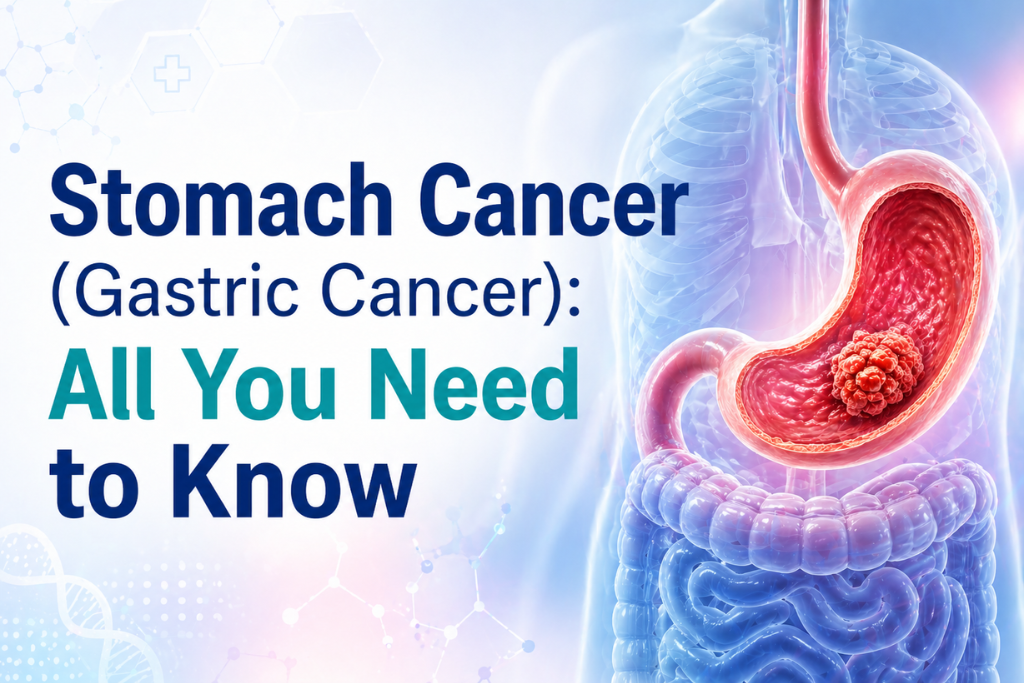
Stomach cancer occurs when abnormal cells grow uncontrollably in the stomach lining. Over time, these cells can form a tumour that invades deeper layers of the stomach and spreads to nearby lymph nodes or distant organs such as the liver, lungs, and peritoneum. The stomach is divided into different regions (cardia, body, antrum, pylorus), and the location of cancer influences symptoms and treatment strategies.Types of Stomach Cancer
1. Adenocarcinoma
This is the most common type, accounting for over 90% of stomach cancers. It arises from the glandular cells of the stomach lining.
2. Lymphoma
A rare type that originates from immune tissue in the stomach.
3. Gastrointestinal Stromal Tumor (GIST)
Arises from the connective tissue of the stomach wall and behaves differently from typical gastric cancers.
4. Neuroendocrine Tumors
Develop from hormone-producing cells of the stomach and vary in aggressiveness.
Causes and Risk Factors of Stomach Cancer
Several factors increase the risk of developing stomach cancer. These include Helicobacter pylori infection, chronic gastritis, smoking, excessive alcohol consumption, high intake of salty, smoked, or preserved foods, low intake of fruits and vegetables, obesity, family history of stomach cancer, previous stomach surgery, and certain genetic conditions. Avoiding tobacco, treating H. pylori infection, and maintaining a healthy diet can significantly reduce risk.Common Symptoms of Stomach Cancer
Early stomach cancer often causes no symptoms. As the disease progresses, symptoms may include persistent indigestion, loss of appetite, early satiety, unexplained weight loss, abdominal pain or discomfort, nausea or vomiting, vomiting blood, black stools, fatigue, and anemia. Persistent or worsening digestive symptoms should be evaluated by a doctor.Diagnosis of Stomach Cancer
Diagnosis involves a combination of clinical assessment and investigations. Upper gastrointestinal endoscopy with biopsy is the definitive diagnostic test. Imaging studies such as CT scan, PET-CT, and endoscopic ultrasound help determine disease extent and staging. Blood tests are used to assess anemia and nutritional status.Staging of Stomach Cancer
Staging depends on the depth of tumour invasion, lymph node involvement, and spread to distant organs. Stomach cancer is staged from Stage I to Stage IV. Accurate staging guides treatment planning and prognosis.Treatment Options for Stomach Cancer
Treatment depends on cancer stage, tumour location, and patient’s overall health. A multidisciplinary oncology team plans individualized treatment.Surgery:
Surgical removal of part or all of the stomach (gastrectomy) is the main treatment for early and locally advanced stomach cancer.
Chemotherapy:
Chemotherapy may be given before surgery to shrink the tumour, after surgery to reduce recurrence risk, or as primary treatment in advanced disease.
Radiation Therapy:
Radiation therapy may be used in selected cases, often combined with chemotherapy.
Iymmunotherap
Immunotherapy is an emerging option for advanced or recurrent stomach cancer.
Palliative Care:
Palliative care focuses on symptom relief, pain control, nutritional support, and improving quality of life in advanced disease.
Targeted Therapy:
Targeted drugs are used in selected patients based on molecular testing.
Nutrition and Supportive Care
Nutritional support is a vital part of stomach cancer care. Dietary counselling, management of weight loss, vitamin supplementation, and feeding support may be required before and after treatment.
Follow-Up and Surveillance
Regular follow-up after treatment is essential to detect recurrence early and manage long-term side effects. Follow-up includes clinical examination, imaging, and blood tests as required.Conclusion
Stomach cancer can be difficult to detect early, but growing awareness and better recognition of symptoms are helping improve outcomes. With continuous advancements in medical technology and treatment approaches, patients today have access to more effective and personalized care, leading to improved recovery and quality of life. If you or your loved ones experience persistent symptoms such as abdominal discomfort, loss of appetite, or unexplained weight loss, it is important to seek timely medical attention. For those looking for advanced stomach cancer treatment in Hubli, early intervention can make a crucial difference. Visit https://hshospital.org/ for more details about Hubli Super Speciality Hospital and its comprehensive cancer care services.FAQs:
Stomach cancer is potentially curable when detected early. Advanced disease can often be controlled with appropriate treatment.
No. Most stomach pain is due to benign conditions, but persistent or unexplained symptoms should be evaluated.
Risk can be reduced by treating H. pylori infection, avoiding tobacco and excessive alcohol, and maintaining a healthy diet.
Consult a doctor if you experience persistent indigestion, unexplained weight loss, difficulty eating, vomiting, blood in stools, or ongoing abdominal pain.