
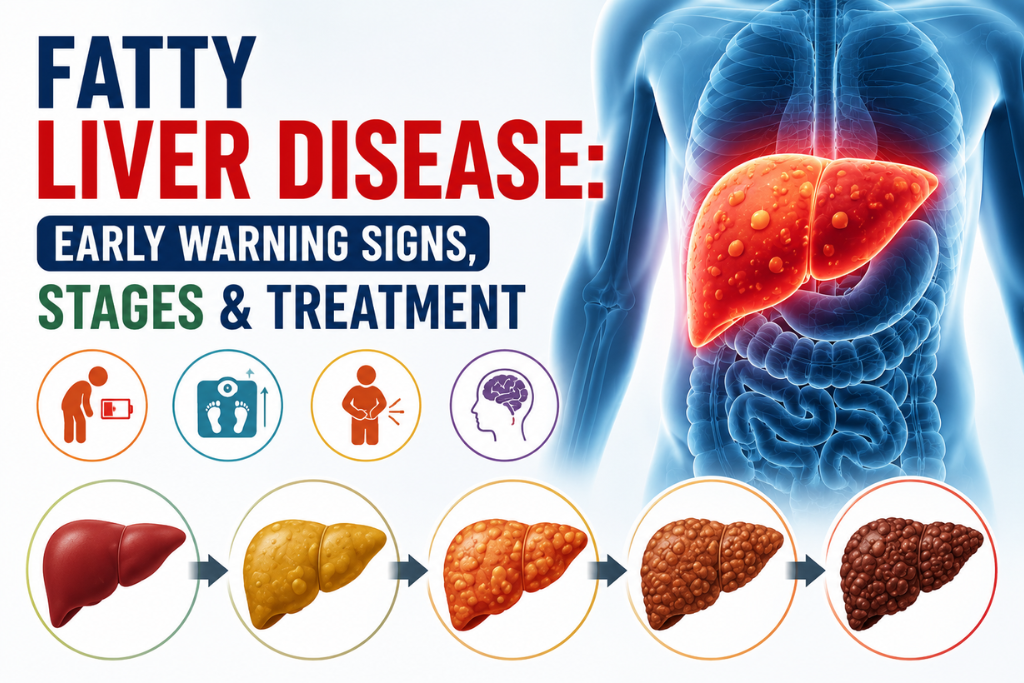
What Is Fatty Liver Disease?
Fatty Liver Disease occurs when fat makes up more than 5% of the liver’s weight. Depending on its cause, it is classified into two main types:- Non-Alcoholic Fatty Liver Disease (NAFLD): Commonly associated with obesity, insulin resistance, diabetes, high cholesterol, and metabolic syndrome.
- Alcohol-Related Fatty Liver Disease (AFLD): Caused by excessive alcohol intake over time.
Early Warning Signs
In many people, Fatty Liver Disease remains symptom-free during the initial stages. However, some individuals may notice:
- ✓ Constant tiredness or low energy
- ✓ Mild discomfort or persistent pain in the upper right side of the abdomen
- ✓ Unexplained weakness
- ✓ Reduced appetite
- ✓ Mild weight loss
As the disease advances, symptoms such as jaundice, abdominal swelling, leg swelling, or confusion may indicate significant liver damage and require immediate medical attention.
Stages of Fatty Liver Disease
- Stage 1: Simple Fatty Liver Fat builds up in the liver without causing inflammation or permanent damage. At this stage, the condition can often be reversed through lifestyle changes
- Stage 2: Steatohepatitis The liver develops inflammation along with fat accumulation. Continued inflammation increases the risk of liver injury.
- Stage 3: Fibrosis Persistent inflammation leads to the formation of scar tissue. Although the liver continues to function, ongoing scarring raises the risk of complications.
- Stage 4: Cirrhosis Extensive scarring permanently affects liver function. Cirrhosis can result in liver failure and significantly increase the risk of liver cancer.
Who Is at Risk?
Several factors can increase the likelihood of developing Fatty Liver Disease, including:- ✓ Being overweight or obese
- ✓ Type 2 diabetes
- ✓ High cholesterol or triglycerides
- ✓ High blood pressure
- ✓ A diet rich in processed or sugary foods
- ✓ Physical inactivity
- ✓ Excessive alcohol consumption
- ✓ Family history of liver disease
How Is It Diagnosed?
Doctors diagnose Fatty Liver Disease by reviewing medical history, conducting a physical examination, and recommending tests such as:- ✓ Liver function blood tests
- ✓ Ultrasound scan
- ✓ FibroScan to measure liver stiffness
- ✓ CT scan or MRI in selected cases
- ✓ Liver biopsy when advanced disease needs confirmation