
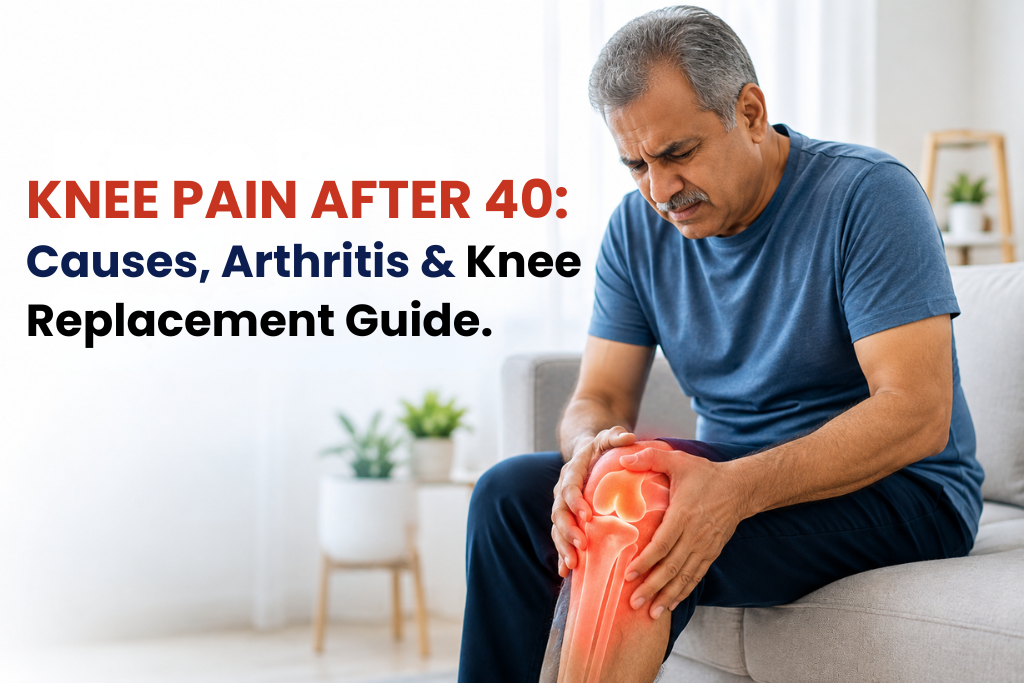
Common Causes of Knee Pain After 40
As people age, the knee joint naturally undergoes changes due to years of movement and pressure. One of the most common reasons for knee pain after 40 is osteoarthritis. This condition occurs when the protective cartilage between the bones gradually wears down, causing friction, swelling, stiffness, and pain during movement. Other common causes include:Symptoms That Should Not Be Ignored
Knee pain can vary from mild discomfort to severe limitations. It is important to consult an orthopedic specialist if you experience:- • Persistent knee pain lasting for several weeks
- • Swelling or stiffness in the knee joint
- • Difficulty walking or climbing stairs
- • Reduced range of motion
- • A sensation of weakness or the knee becoming unstable
- • Pain that affects sleep or daily activities
When Is Knee Replacement Needed?
Knee replacement surgery is usually considered when severe arthritis or joint damage affects a person’s ability to perform regular activities. It is not the first treatment option and is generally recommended when other treatments no longer provide sufficient relief.A doctor may suggest knee replacement when:
- • Knee pain becomes severe and constant
- • Daily activities become difficult
- • Medicines and physiotherapy provide limited improvement
- • X-rays show significant joint damage
- • The quality of life is affected due to restricted movement
How to Maintain Healthy Knees After 40
Taking care of your knees can help reduce the risk of serious joint problems. Some helpful steps include:- • Keeping a healthy weight to lower stress on joints
- • Doing regular low-impact exercises like walking and swimming
- • Strengthening muscles around the knee
- • Avoiding excessive stress on joints
- • Following a balanced diet that supports bone and joint health
- • Seeking medical advice for continuous pain instead of ignoring symptoms
Conclusion
Knee pain after 40 should not be considered a normal part of ageing, especially when it affects movement and daily life. Conditions like arthritis can gradually worsen without proper care, making early diagnosis and treatment important. With advanced medical treatments and expert guidance, many patients can achieve better mobility and improved quality of life.For individuals experiencing severe knee problems and looking for reliable treatment options, HSS Hospital provides expert orthopedic care and advanced solutions. Consulting the ,Best Orthopedic Doctor in Hubli can help you understand the right treatment approach based on your knee condition. If surgery becomes necessary, exploring Knee Replacement Surgery in Hubli with experienced specialists can help restore movement and reduce long-term pain.