
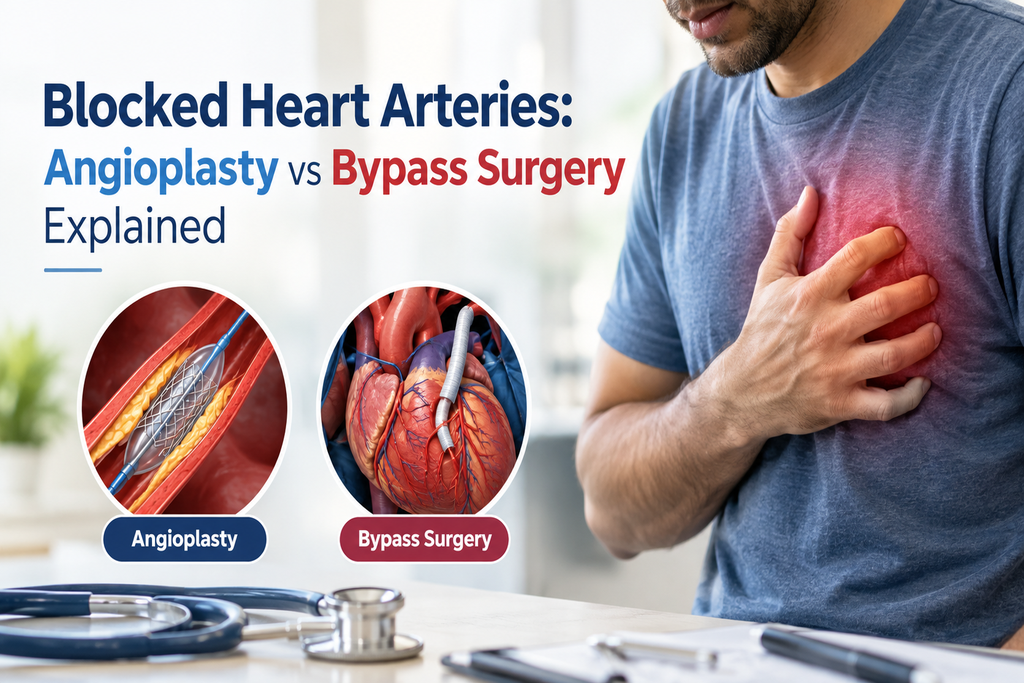
Angioplasty and bypass surgery are different procedures, and the appropriate option varies from one patient to another. Understanding how each treatment works can help patients have a more informed discussion with their cardiologist.
Understanding Angioplasty
A catheter-based procedure can help reopen a restricted coronary artery and support better blood flow to the heart. It is commonly known as percutaneous coronary intervention (PCI).
During the procedure, a cardiologist guides a thin, flexible catheter through a blood vessel, commonly accessed through the wrist or groin. The catheter is carefully moved toward the affected coronary artery. A small balloon is then inflated at the narrowed area to widen the passage and improve blood circulation.
A tiny mesh tube may be positioned inside the artery to help keep it open. This small mesh-like device supports the artery and helps maintain an open pathway for blood flow. Since angioplasty does not require open-heart surgery, recovery is generally quicker than recovery from bypass surgery. It may also be performed urgently in certain types of heart attacks where restoring blood flow quickly is important.Understanding Bypass Surgery
Coronary artery bypass grafting, widely known as bypass surgery or CABG, is an operation that creates an alternative route for blood to reach the heart.Instead of removing the blockage, the surgeon uses a healthy blood vessel taken from another area of the patient’s body. This vessel is connected in a way that allows blood to travel around the blocked section of the coronary artery. Bypass surgery may be considered when several arteries are significantly affected, when blockages are particularly complex, or when their location makes angioplasty less suitable.
How Do Doctors Choose Between the Two?
There is no universal treatment that works best for every person with coronary artery disease. The recommendation is based on the patient’s individual condition.Angioplasty can be considered when a narrowed artery can be safely opened using a catheter and stent. Because it is minimally invasive, patients typically experience a shorter recovery compared with major heart surgery.
Bypass surgery may be considered when there are several significant blockages or when the pattern of coronary artery disease is complex. As it involves surgery, patients generally need more time to recover.
Before making a recommendation, doctors may review angiography results, heart function, symptoms, age, diabetes, kidney function, blood pressure, cholesterol, and other relevant health factors.
For some patients, a cardiologist and cardiac surgeon may jointly review the case before deciding on the most appropriate approach.
Recovering After Heart Treatment
Opening a blocked artery is an important part of treatment, but caring for your heart remains essential after the procedure. Following the medical team’s advice is essential for long-term recovery.Patients may be advised to take their prescribed medicines regularly, keep blood pressure and cholesterol under control, manage diabetes, avoid tobacco, follow a balanced diet, and gradually increase physical activity according to medical advice.
Some patients may benefit from cardiac rehabilitation. These programs can provide supervised exercise, health education, and support for developing habits that promote better cardiovascular health.
Medication should never be stopped or changed without consulting the treating doctor. This is particularly important for medicines prescribed to reduce the risk of blood clots following certain heart procedures.
Recognizing Warning Signs
Certain symptoms should never be ignored. Chest discomfort or pressure, difficulty breathing, unusual sweating, sudden weakness, nausea, or pain that moves toward the arm, shoulder, back, neck, or jaw may indicate a serious heart problem. When these symptoms appear suddenly, become severe, or do not improve, immediate medical attention is important. Do not delay emergency care while waiting for symptoms to settle on their own.Important Questions for Your Cardiologist
Patients considering angioplasty or bypass surgery can discuss the following with their doctor:
- • How serious are my coronary artery blockages?
- • How many arteries are affected?
- • Which treatment is being recommended and why?
- • What risks and benefits should I know about?
- • How long might my recovery take?
- • Which medicines will I need after treatment?
- • What changes should I make to my diet and daily routine?
Conclusion
Angioplasty and bypass surgery restore circulation to the heart through two distinct treatment approaches. Angioplasty involves opening a narrowed artery, often with the help of a stent, while bypass surgery creates an alternative pathway around a blocked artery. The treatment choice is based on the blockage pattern, heart function, medical history, and the patient’s overall health.
Anyone diagnosed with coronary artery disease should consult a qualified cardiac specialist before deciding on a procedure. HSS Hospital offers cardiac care and professional guidance to help patients understand their condition and available Heart treatment services options. If you are looking for a trusted Cardiac hospital in Hubli, discussing your condition with an experienced cardiac team can help you understand the treatment approach most appropriate for your needs.