
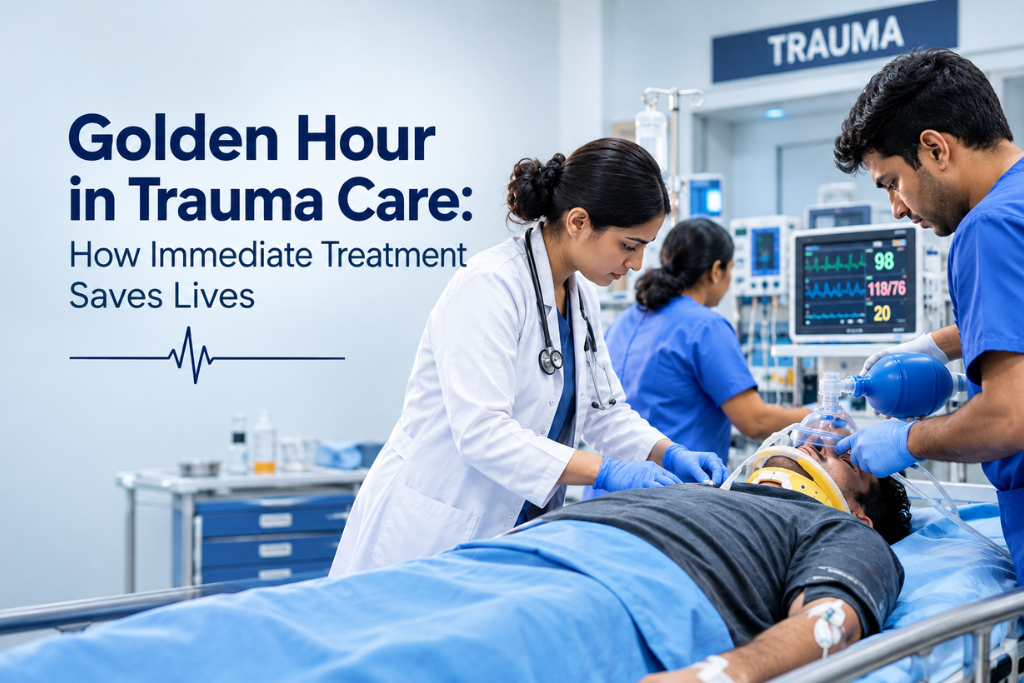
Although it does not mean that treatment must always happen within exactly 60 minutes, it reminds us that delays in emergency care can increase the risk of serious complications.
Understanding the Golden Hour in Trauma Care
The golden hour refers to the critical early period following a traumatic injury when rapid medical assessment and treatment may improve the patient’s chances of survival. During this time, doctors work to identify dangerous injuries and address problems that could threaten life.Some injuries are easy to recognise, such as open wounds or broken bones. Others, including internal bleeding and injuries to vital organs, may not show obvious signs immediately. This is why a medical examination is important even when an injured person appears stable.
Why Is Immediate Treatment Important?
Quick medical care helps doctors identify serious conditions and begin the right treatment before complications become worse.1. Controlling Blood Loss
Severe bleeding can reduce the amount of oxygen reaching vital organs. Prompt medical attention helps control bleeding and manage the effects of blood loss.
2. Protecting Vital Organs
Head, chest, and abdominal injuries can affect the brain, lungs, heart, and other important organs. Early assessment helps doctors identify these injuries and decide on the necessary treatment.
3. Maintaining Breathing and Blood Circulation
Serious trauma may affect a person’s ability to breathe or maintain normal circulation. Emergency teams prioritise these functions to help stabilise the patient.
4. Preventing Further Complications
Delaying medical care can increase the severity of certain injuries.Timely intervention, monitoring, and appropriate medical support can help reduce risks and improve recovery.
What Happens When a Patient Reaches the Hospital?
Emergency trauma care begins with a rapid assessment of the patient’s condition. Medical professionals check essential functions such as breathing and circulation and look for injuries that require immediate attention.Once the patient is stabilised, doctors may recommend X-rays, CT scans, blood tests, or other investigations depending on the injury. Treatment may include wound care, fracture stabilisation, emergency procedures, surgery, or intensive care.
The treatment plan depends on the nature and severity of the injury. Teamwork among doctors, nurses, surgeons, and specialists ensures patients receive timely and appropriate treatment.
How Can You Help Before Medical Assistance Arrives?
The first few minutes after an accident can be stressful, but taking appropriate steps can help protect the injured person.- • Call emergency medical services as soon as possible.
- • Make sure the surrounding area is safe before approaching the injured person.
- • Use a clean cloth to press gently but firmly on the bleeding area, provided it is safe.
- • Avoid moving the person unnecessarily if a neck, back, or spinal injury is suspected.
- • Do not give food, water, or medicines to a seriously injured person.
- • Follow the instructions given by emergency responders.
Choosing the Right Trauma Care Facility
During an emergency, choosing a suitable hospital is an important step. A trauma care facility should be equipped to assess serious injuries, provide initial stabilisation, and arrange appropriate diagnostic tests and specialist treatment.Knowing the location of a nearby hospital and understanding its emergency services before an accident occurs can save valuable time. It is also helpful to keep emergency contact numbers accessible and share important medical information with healthcare professionals when available.
Conclusion
The golden hour in trauma care reminds us that quick decisions and timely medical attention can save lives. Recognising serious injuries, contacting emergency services, and reaching an appropriate medical facility without unnecessary delay are essential steps in managing trauma.For people searching for Emergency trauma care in Hubli , HSS Hospital is a local option to consider. If you need 24/7 emergency care in Hubli, visit the HSS Hospital website to confirm its emergency facilities and current availability. Remember, prompt medical attention can make a meaningful difference when every minute matters.