
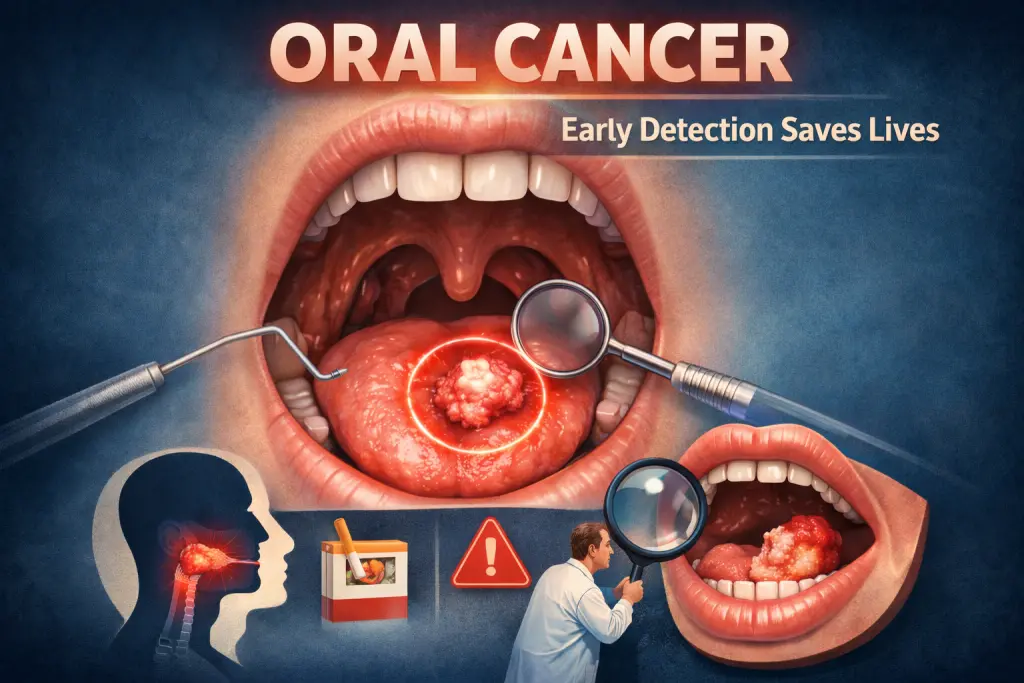
According to Statistic of India has one of the highest oral cancer burdens in the world. It contributes a
large share of global cases thanks largely to tobacco (smoked and smokeless) and areca nut use.
According to one recent national source, there are approximately 77,000 new oral cancer cases in India
annually, with men affected more than women.
Oral cancer constitutes a major proportion of all cancers in India — around 11–12% of all male cancers
and significant among females too.
A government report noted oral cancer incidence in Karnataka is around 12 per 100,000 people, higher
than the national average for oral and related cancers.
Hospital registry data (from the Kidwai Memorial Institute) historically showed that in Karnataka, about
24% of all cancer cases are related to tobacco, and oral cancer is a prominent component.
Karnataka’s broader cancer data (not limited to oral cancer) suggests 26,516 cancer deaths overall in
recent estimates, a portion of which are due to oral cancers — especially those linked to tobacco use.
Statistic India (Approx) Karnataka (Approx)
Oral cancer new cases per year
India (Approx) : ~77,000 Karnataka (Approx.) : Not separately reported statewide, but incidence ~12/100,000Oral cancer deaths per year
India (Approx) : ~52,000 Karnataka (Approx.) : Part of ~26,516 total cancer deaths (oral cancer is a significant contributor)Major cause
India (Approx) : Tobacco (smoked & smokeless) Karnataka (Approx) : Tobacco (especially smokeless)Deaths (Mortality)
There are about 52,000 deaths annually in India due to oral cancer. Oral cancer accounts for a large share of tobacco-related cancer deaths nationwide since it is often detected late.Mouth Cancer: Causes, Symptoms, Diagnosis, and Treatment
Mouth cancer, also known as oral cancer, is a serious health condition that affects thousands of people every year. It can develop in any part of the mouth, including the lips, tongue, cheeks, gums, floor of the mouth, and roof of the mouth. Early detection and timely treatment can significantly improve survival rates and quality of life.What is Mouth Cancer
Mouth cancer is a type of cancer that occurs when abnormal cells grow uncontrollably in the tissues of the oral cavity. It is one of the most common cancers in India, especially among people who use tobacco or consume alcohol regularly.Types of Mouth Cancer
1. Squamous Cell Carcinoma (SCC)
Starts from the flat cells lining the mouth Affects tongue, cheeks, gums, floor of mouth, lips Strongly linked to tobacco, gutkha, pan, smoking, alcohol2. Verrucous Carcinoma
A slow-growing variant of squamous cell carcinoma Looks like a warty or cauliflower-like growth Rarely spreads to lymph nodes Common in chronic tobacco chewers3. Adenocarcinoma
Arises from minor salivary glands Usually seen in palate or inner cheeks Less common than SCC4. Mucoepidermoid Carcinoma
Cancer of salivary gland tissue Can occur inside the mouth or jaw Seen in both adults and children5. Lymphoma
Cancer of the immune system May appear as a soft swelling in tonsils or floor of mouth6. Melanoma (Oral Melanoma)
Rare but very aggressive Appears as black or brown patch Often on palate or gums7. Sarcoma
Develops from muscle, bone, or connective tissue Includes osteosarcoma, fibrosarcoma Rare in the oral cavityCauses and Risk Factors of Mouth Cancer
Several factors increase the risk of developing mouth cancer, including: Tobacco use (smoking cigarettes, bidis, chewing tobacco, gutkha, pan masala) Excessive alcohol consumption Betel nut (areca nut) chewing Poor oral hygiene Human Papillomavirus (HPV) infection Prolonged sun exposure (risk for lip cancer) Family history of cancer Avoiding tobacco and alcohol can significantly reduce the risk of mouth cancer.Common Symptoms of Mouth Cancer
Early symptoms of mouth cancer are often ignored, which leads to late diagnosis. Common signs include: A non-healing mouth ulcer Red or white patches inside the mouth Persistent mouth pain or soreness Difficulty in chewing, swallowing, or speaking Lump or thickening in the cheek Loose teeth without dental cause Numbness in the mouth or tongue Unexplained bleeding in the mouth If these symptoms last for more than two weeks, it is important to consult a doctor immediately.Diagnosis of Mouth Cancer
Mouth cancer is diagnosed through a combination of: Physical examination of the mouth Biopsy of suspicious lesions Imaging tests such as CT scan, MRI, or PET scanFAQs:
Cancer is a disease in which abnormal cells grow uncontrollably and can spread to other parts of the body if not treated early.
Common cancers include: Oral (mouth) cancer, Breast cancer, Lung cancer, Cervical cancer, Colorectal cancer, Prostate cancer, Blood cancers (leukemia, lymphoma)
Cancer treatment depends on the type and stage of cancer. Common treatments include: Surgery Chemotherapy Radiation therapy Immunotherapy Targeted therapy Hormone therapy
Doctors decide treatment based on: Type of cancer Stage of cancer Patient’s age and overall health Test reports and scans A multidisciplinary cancer team usually plans the treatment.
Yes, many cancers are curable if detected early. Even advanced cancers can often be controlled and quality of life improved with proper treatment.
Not always. Hair loss depends on: Type of chemotherapy drug Dose and duration Some patients may have mild hair thinning, while others may not lose hair at all.
Radiation treatment itself is painless. However, some patients may experience side effects like skin irritation or fatigue during the course.
Side effects vary by treatment and patient but may include: Fatigue Nausea or vomiting Loss of appetite Hair loss Low immunity Doctors provide medicines and support to manage these effects.
Treatment duration varies: Surgery: few days to weeks Chemotherapy: several weeks or months Radiation: usually 3–6 weeks Your doctor will explain the exact schedule.
Many patients can continue daily activities with rest and adjustments. Heavy work may need to be avoided during treatment.
Cost depends on: Type of cancer Treatment method Duration of therapy Government schemes, insurance, and hospital financial assistance may help.
Healthy balanced diet Avoid tobacco and alcohol Adequate rest Regular follow-up visits Emotional and family support
Yes. Regular follow-up is important to: Monitor recovery Detect recurrence early Manage long-term side effects
Some cancers can be prevented by: Avoiding tobacco Limiting alcohol Healthy diet and exercise Regular screening tests Vaccinations (HPV, Hepatitis B)
Consult a doctor if you notice: Non-healing ulcers Unusual lumps Persistent pain Unexplained weight loss Difficulty swallowing or breathing
Yes, Cancer treatment can affect fertility Especially chemotherapy and radiation therapy. Discuss fertility preservation options with doctors before starting cancer treatment.
Surgery removes cancerous tumours and relieves symptoms caused by tumours. It can be used alone or in combination with other cancer treatments.
Chemotherapy uses drugs to kill cancer cells. It is also used to shrink tumours before surgery Kill any remaining cancer cells after surgery.
Radiation therapy makes use of radiation to destroy cancerous cells. It may be used as a stand-alone treatment or in other cancer treatments.
Targeted therapy uses drugs to target proteins or genes contributing to the growth and spread of cancer cells.
Immunotherapy helps the body’s immune system fight cancer. It can be used alone or in combination with other cancer treatments.
Hormone therapy blocks and lowers the levels of hormones contributing to the growth of certain cancers
Yes, cancer treatment can affect your mental health and lead to symptoms such as anxiety and depression. It’s crucial to seek support from mental health professionals if you experience these symptoms