
Burden of Lung Cancer in India
Lung cancer is among the leading causes of cancer-related deaths in India. The country reports approximately 70,000–75,000 new lung cancer cases every year. Mortality remains high due to late diagnosis, aggressive disease biology, and high prevalence of tobacco use. Lung cancer is more common in men, but the incidence among women is steadily rising. While smoking is the primary risk factor, a significant proportion of lung cancer cases in India occur in non-smokers, often linked to indoor air pollution, biomass fuel exposure, and environmental factors.Lung Cancer in Karnataka
Karnataka reports a substantial number of lung cancer cases annually. Hospital-based cancer registries indicate lung cancer as one of the major thoracic malignancies. Urban regions show increasing incidence due to air pollution and smoking, while rural areas face challenges related to delayed diagnosis and limited access to specialized care. Key Statistics at a Glance- India: New lung cancer cases per year: ~70,000–75,000 Lung cancer deaths per year: ~66,000 Male predominance, rising incidence in women
- Karnataka: Major contributor to cancer-related mortality Late-stage diagnosis common
What Is Lung Cancer?
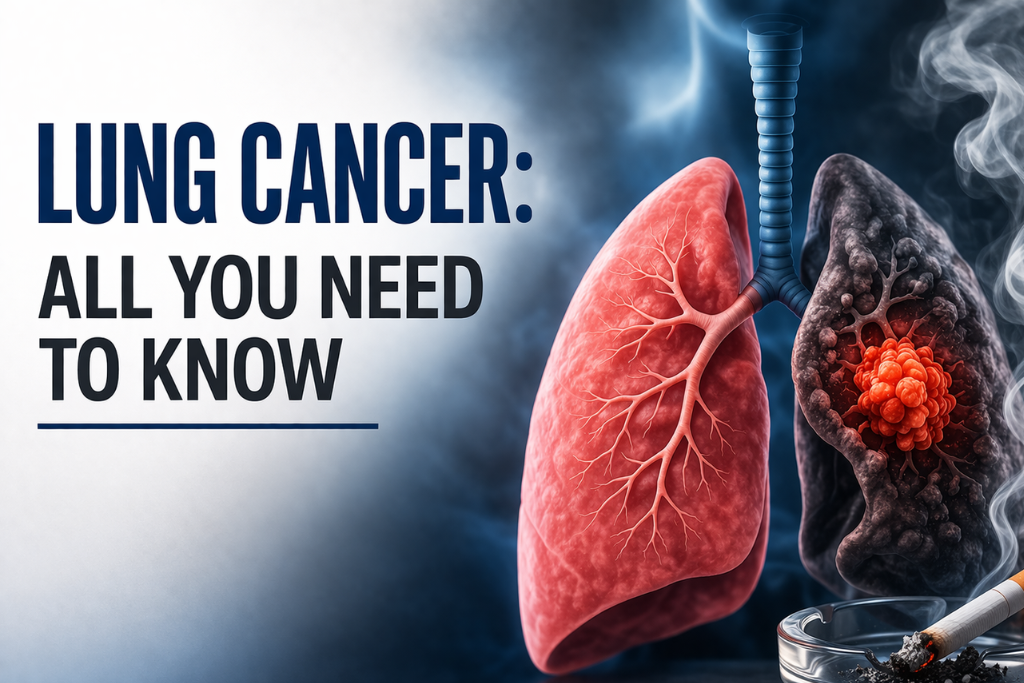
Lung cancer occurs when abnormal cells grow uncontrollably in the lungs and form a tumor. These cancer cells can invade surrounding lung tissue and spread to lymph nodes or distant organs such as the brain, bones, liver, and adrenal glands. Lung cancer is broadly classified into two main categories based on microscopic appearance and behavior, which significantly influences treatment decisions.Types of Lung Cancer
- Non-Small Cell Lung Cancer (NSCLC) This accounts for about 80–85% of lung cancers. It generally grows and spreads more slowly than small cell lung cancer. Subtypes include: – Adenocarcinoma (most common, especially in non-smokers) – Squamous cell carcinoma (strongly associated with smoking) – Large cell carcinoma
- Small Cell Lung Cancer (SCLC) This is a highly aggressive form of lung cancer that accounts for about 15–20% of cases. It grows rapidly and spreads early, often requiring prompt systemic treatment.
Causes and Risk Factors of Lung Cancer
Several factors increase the risk of developing lung cancer. These include tobacco smoking (cigarettes, bidis, cigars), second-hand smoke exposure, indoor air pollution from biomass fuels, outdoor air pollution, occupational exposure to asbestos, radon, and other chemicals, previous lung disease such as tuberculosis or chronic obstructive pulmonary disease, family history of lung cancer, and increasing age. Avoiding tobacco exposure remains the most effective preventive measureCommon Symptoms of Lung Cancer
Early lung cancer may not cause symptoms. As the disease progresses, symptoms may include persistent cough, coughing up blood, chest pain, shortness of breath, wheezing, recurrent respiratory infections, hoarseness of voice, unexplained weight loss, fatigue, and bone pain or headaches in advanced disease. Any persistent respiratory symptom lasting more than two to three weeks should be evaluated by a doctor.- Diagnosis of Lung Cancer Diagnosis involves a combination of clinical assessment and investigations. Chest X-ray and CT scan of the chest are commonly used initial imaging tests. Bronchoscopy, CT-guided biopsy, or biopsy of metastatic sites helps confirm diagnosis. Molecular testing and immunohistochemistry are essential to identify specific genetic mutations and biomarkers that guide targeted and immunotherapy.
- Staging of Lung Cancer Staging determines the extent of disease and is classified from Stage I to Stage IV. It depends on tumor size, lymph node involvement, and distant spread. Accurate staging is crucial for selecting appropriate treatment and predicting prognosis.
Treatment Options for Lung Cancer
Treatment depends on cancer type, stage, molecular profile, and patient’s overall health. Management is planned by a multidisciplinary thoracic oncology team.-
1. Surgery:
Surgery is primarily used for early-stage non-small cell lung cancer and involves removal of part or all of the affected lung. -
2. Radiation Therapy:
Radiation therapy may be used as definitive treatment, post-operative therapy, or for symptom relief in advanced disease. -
3. Chemotherapy:
Chemotherapy is used alone or in combination with radiation and surgery, especially in advanced stages. -
4. Targeted Therapy:
Targeted drugs are used in patients with specific genetic mutations such as EGFR, ALK, or ROS1. -
5. Immunotherapy:
Immunotherapy has revolutionized lung cancer treatment and is used alone or in combination with chemotherapy in selected patients. -
6. Palliative Care:
Palliative care focuses on symptom control, pain management, breathlessness relief, and improving quality of life in advanced disease.
Nutrition and Supportive Care
Supportive care is an integral part of lung cancer management. Nutritional counseling, pulmonary rehabilitation, smoking cessation support, pain management, and psychological support are essential components of comprehensive care.Follow-Up and Surveillance
Regular follow-up after treatment is necessary to monitor response, detect recurrence early, manage long-term side effects, and support rehabilitation. Follow-up includes clinical evaluation, imaging, and laboratory tests as required.Conclusion
Lung cancer remains a critical health challenge, often diagnosed at later stages, making early awareness and timely intervention extremely important. With continuous advancements in medical technology, early detection methods, and personalized therapies, patients today have better chances of effective treatment and improved quality of life. Recognizing symptoms early and opting for the right care can make a life-saving difference. Access to trusted and advanced Lung cancer treatment in hubli ensures patients receive the timely support and specialized care they need.
Choosing the right hospital plays a vital role in this journey. At Hubli Super Speciality Hospital, patients benefit from expert medical teams, modern diagnostic facilities, and comprehensive cancer care. For more details or to consult specialists, visit https://hshospital.org/ and take a proactive step toward early diagnosis and effective treatment. Early detection doesn’t just improve outcomes—it saves lives.
FAQs: