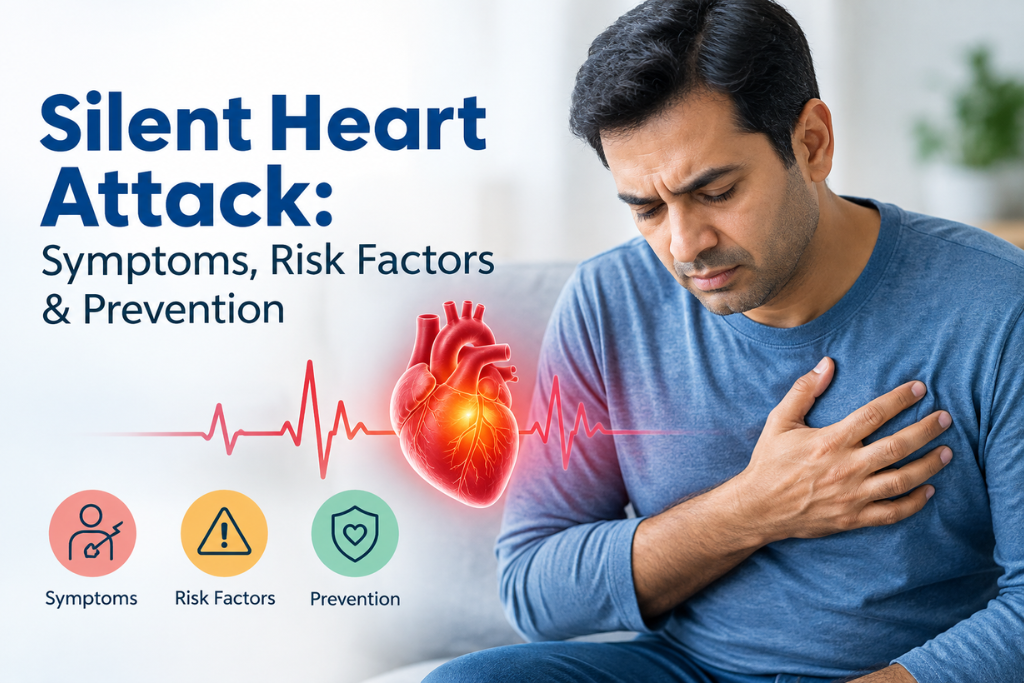
A heart attack is commonly associated with severe chest pain, sweating, and breathing difficulty. However, some heart attacks occur without obvious warning signs. These are known as silent heart attacks. Since symptoms can be mild and mistaken for common health issues, many people may not realize they need medical attention. Understanding the symptoms, risk factors, and prevention methods can help protect heart health.
What Is a Silent Heart Attack?
A silent heart attack happens when the heart muscle does not receive enough blood supply, causing damage, but the person experiences little or no noticeable symptoms. Unlike a traditional heart attack, the warning signs may be mild and feel like tiredness, acidity, stress, or general discomfort.
Many people discover they have experienced a silent heart attack during routine medical tests such as an ECG or other heart evaluations. Although symptoms may not seem serious, the damage caused to the heart can increase the risk of future heart problems.
Symptoms of a Silent Heart Attack
Silent heart attack symptoms are often less intense and can be difficult to identify. Some common signs include:
- • Unusual tiredness or weakness
- • Mild chest discomfort, pressure, or heaviness
- • Shortness of breath
- • Dizziness or light-headedness
- • Nausea or stomach discomfort
- • Excessive sweating
- • Discomfort in the jaw, neck, back, shoulders, or arms
- • Sudden anxiety or feeling unwell
These symptoms may come and go, causing people to ignore them. However, unexplained changes in health should not be overlooked, especially if you have risk factors for heart disease.
Risk Factors That Increase the Chances of a Silent Heart Attack
Several health conditions and lifestyle habits can increase the risk of silent heart attacks.
Diabetes
People with diabetes have a higher risk of heart disease because high blood sugar levels can damage blood vessels. Diabetes can also affect nerve function, making heart attack symptoms less noticeable.
High Blood Pressure
Long-term high blood pressure puts extra pressure on the heart and can damage arteries. This increases the chances of developing blockages that affect blood flow.
High Cholesterol
High levels of unhealthy cholesterol can cause plaque buildup in arteries. Over time, this can reduce blood supply to the heart and increase heart attack risk.
Smoking
Smoking damages blood vessels, increases the risk of blood clots, and reduces oxygen supply to the heart.
Unhealthy Lifestyle
Lack of exercise, unhealthy eating habits, excessive stress, and being overweight can negatively affect heart health.
Age and Family History
The risk of heart disease increases with age. People with a family history of heart problems should focus on regular check-ups and preventive care.
How Can You Prevent a Silent Heart Attack?
Making healthy lifestyle choices can help reduce the risk of heart problems.
Maintain a Healthy Diet
Eating fruits, vegetables, whole grains, lean proteins, and healthy fats supports heart health. Reducing processed foods, excess salt, sugar, and unhealthy fats helps manage cholesterol and blood pressure.
Exercise Regularly
Physical activity strengthens the heart, improves blood circulation, and helps maintain a healthy weight. Walking, cycling, and regular workouts support cardiovascular health.
Control Blood Pressure, Sugar, and Cholesterol
Regular health check-ups help identify problems early. People with diabetes, high blood pressure, or cholesterol issues should monitor their condition and follow medical advice.
Avoid Smoking and Manage Stress
Quitting smoking, managing stress, getting proper sleep, and maintaining a balanced routine contribute to better heart health.
Importance of Regular Heart Check-Ups
Since silent heart attacks may not always show clear symptoms, regular heart screenings are important, especially for people with diabetes, hypertension, high cholesterol, obesity, or a family history of heart disease.
Early detection helps doctors recommend suitable treatments and lifestyle changes before the condition becomes serious. Regular heart evaluations can support long-term heart health.
Conclusion
A silent heart attack may not cause severe symptoms, but it can still lead to serious heart damage. Ignoring signs like unexplained tiredness, breathing difficulty, mild chest discomfort, or sudden weakness can delay diagnosis and increase the risk of future complications. Being aware of warning signs, following a healthy lifestyle, and going for regular heart check-ups can help protect your heart.
If you experience symptoms or have risk factors related to heart disease, consulting an experienced
Cardiologist in Hubli or
Heart specialist in Hubli can help with early detection, accurate diagnosis, and effective treatment.
HSS Hospital provides advanced cardiac care, expert medical guidance, and comprehensive support to help patients maintain better heart health and improve their quality of life.